Botanical Prints
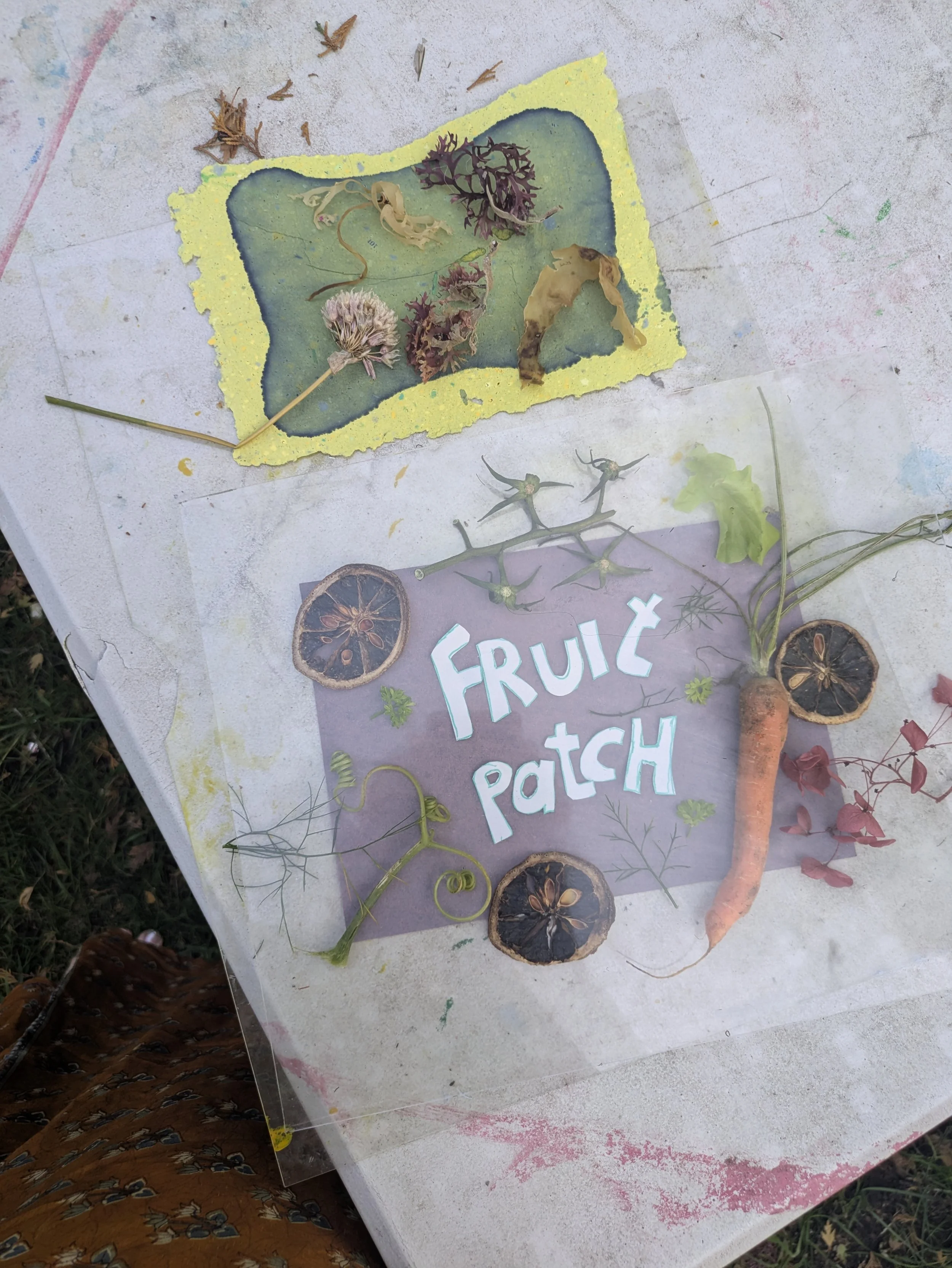
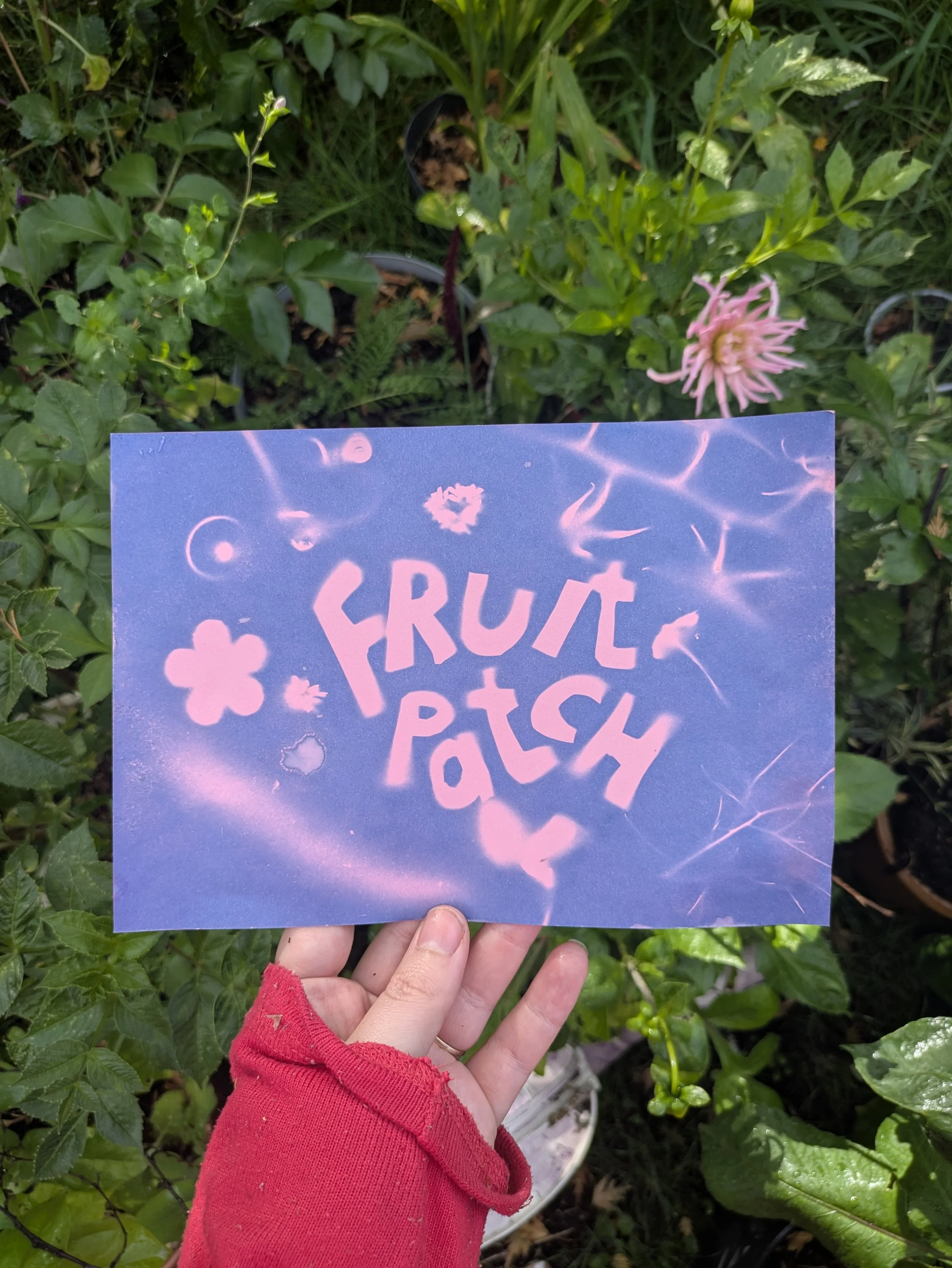
This ongoing body of work explores printmaking as a collaboration with nature.
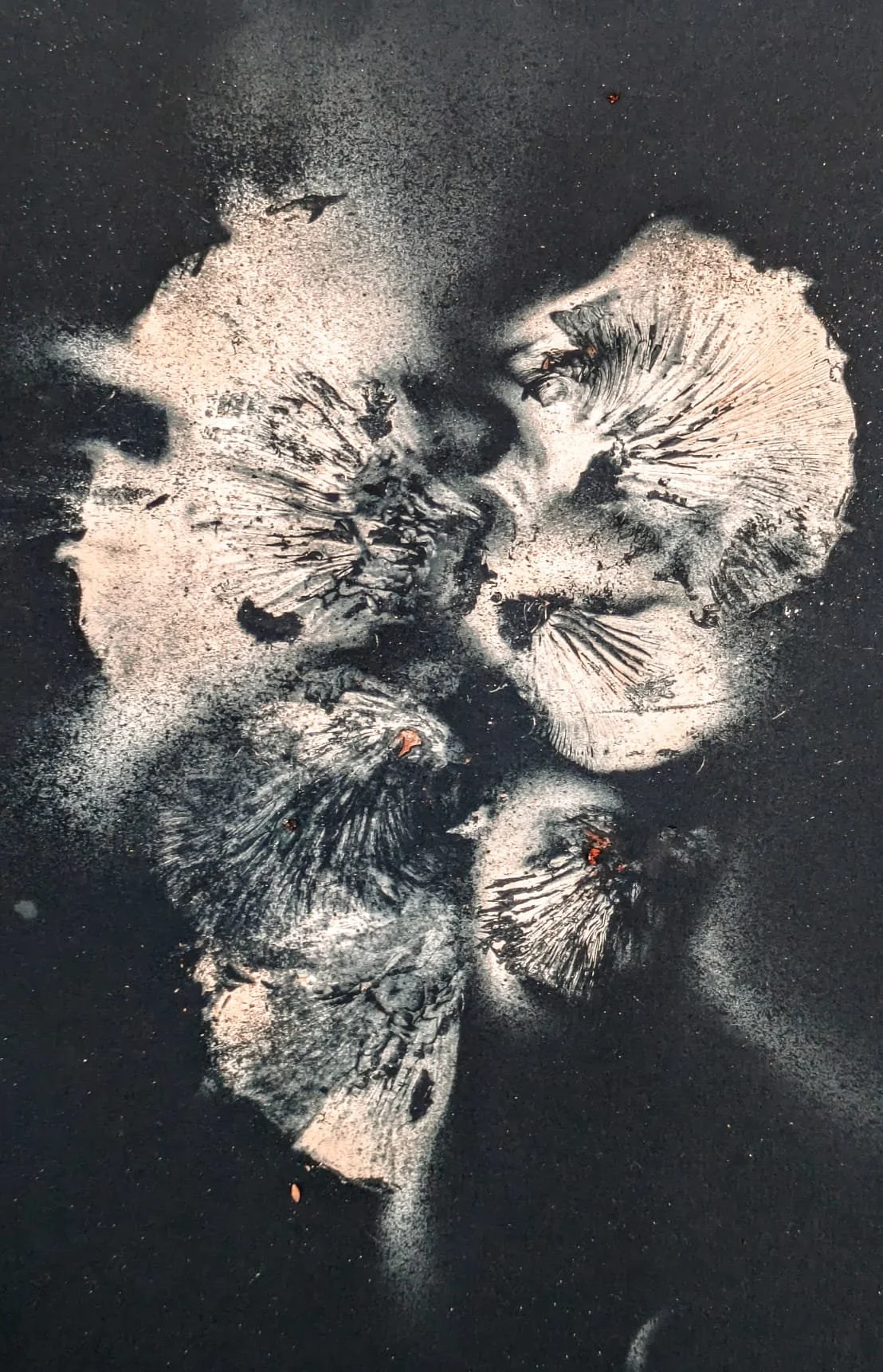
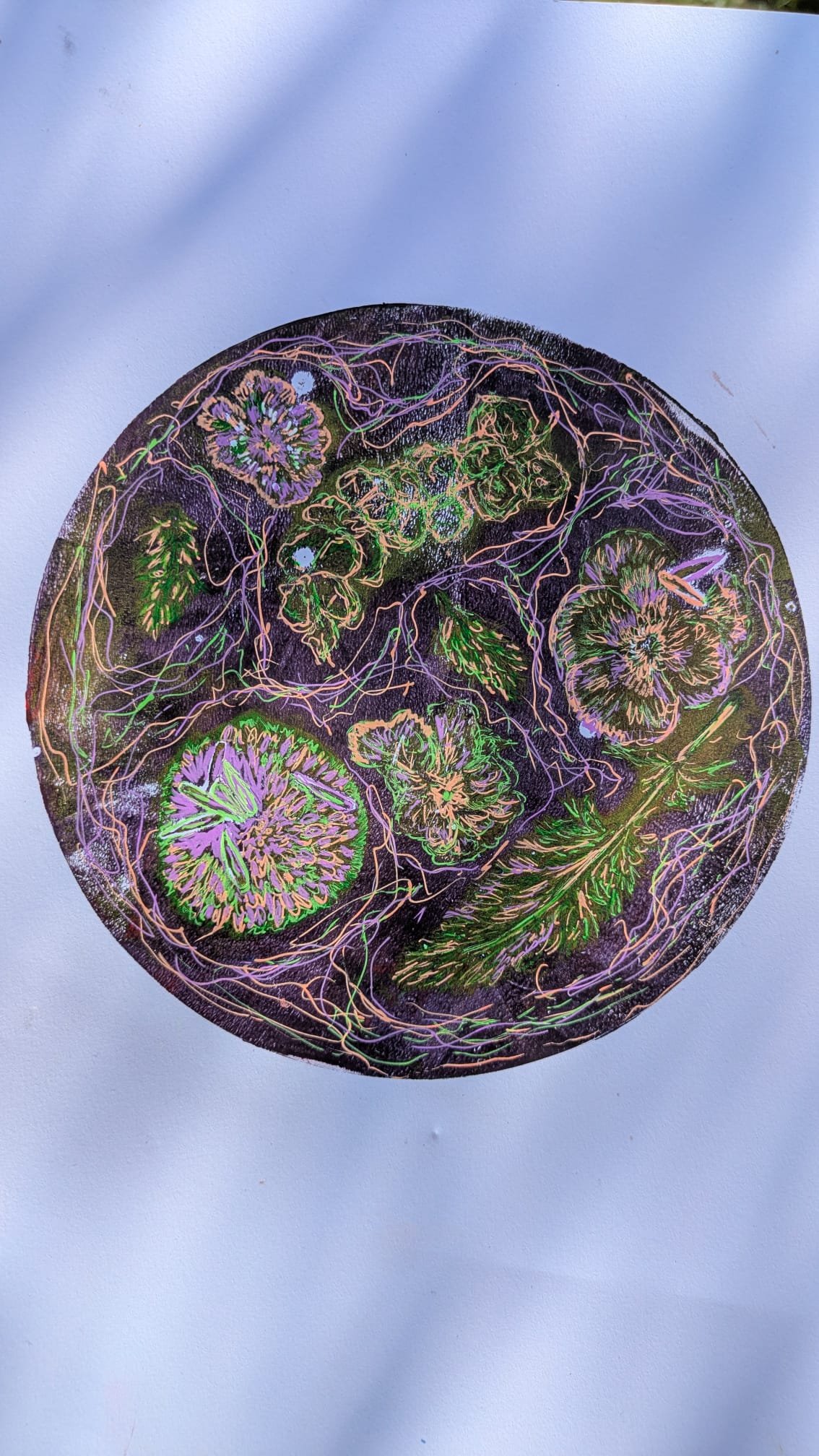
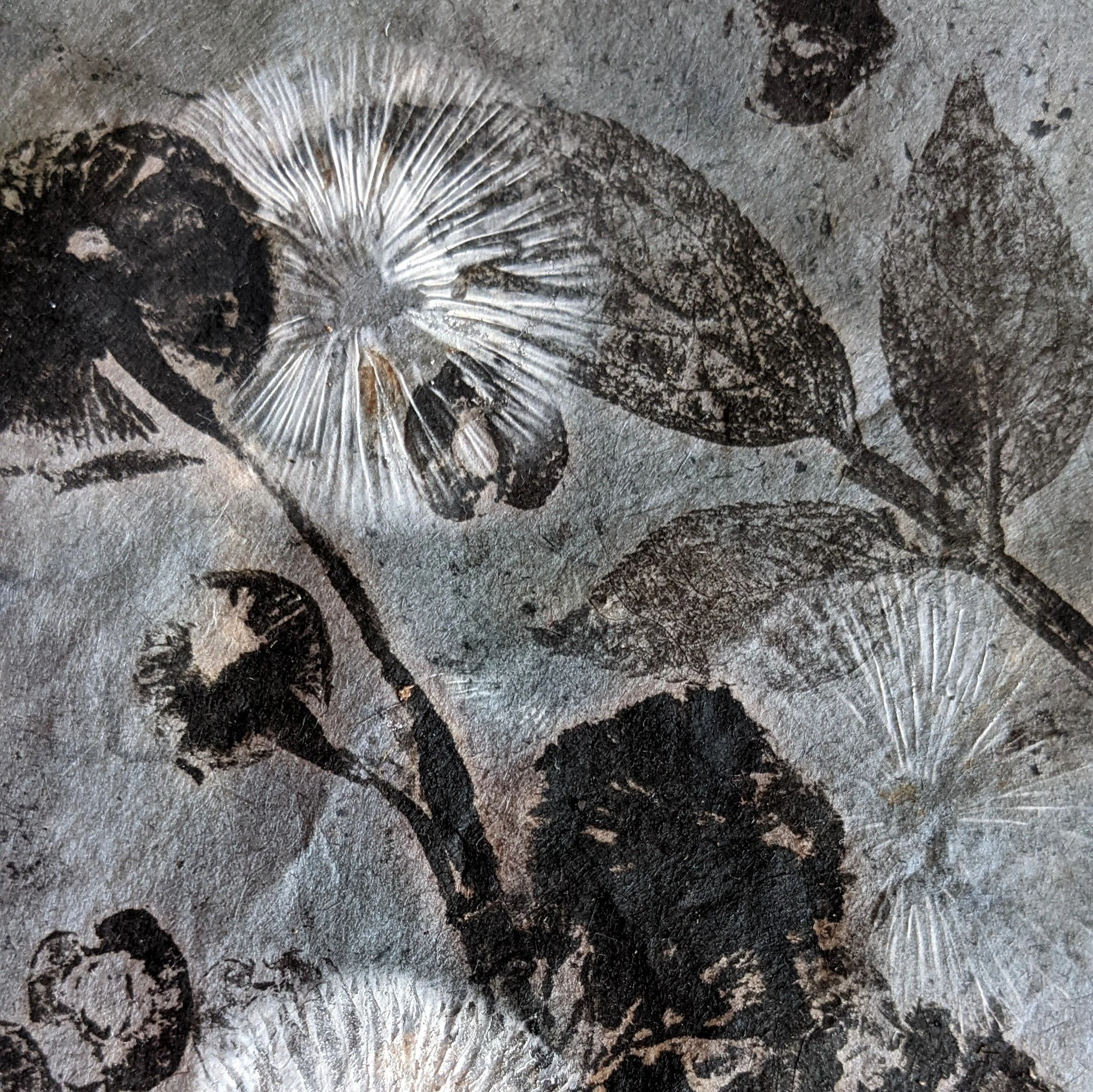
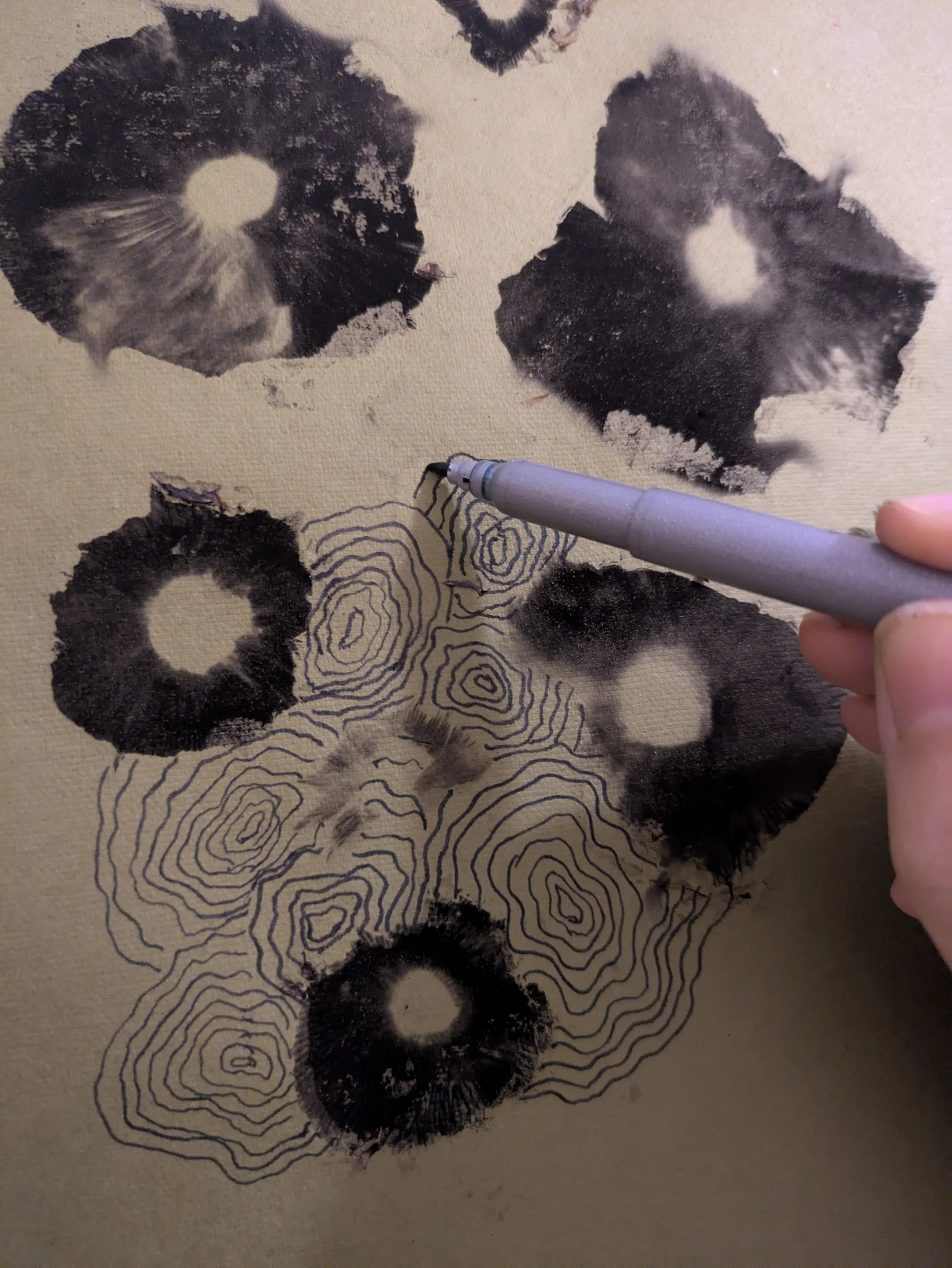
Using foraged leaves, vegetables, mushroom spores, berry dyes, and natural papers, I create layered botanical prints that sit somewhere between documentation, experimentation, and imagined ecosystems. The works combine techniques including spore printing, Gelli printing, monoprinting, natural pigments, and drawing.
I often think of leaves as ready-made printing plates, and mushroom spores as tiny self portraits made by the mushrooms themselves. Each print becomes a record of contact, pressure, texture, growth, decay, and chance.
Many of the materials I work with are fleeting or easily overlooked: wilted cabbage leaves, weeds growing through cracks, damp foliage gathered on walks, or mushrooms that appear overnight and disappear just as quickly. Printmaking allows me to preserve traces of these temporary encounters while still embracing unpredictability and transformation.
The process itself is an important part of the work. Some prints emerge clearly, while others blur, stain, smudge, or partially disappear. I often layer multiple techniques together, allowing textures and shapes to build up slowly over time. After printing, I frequently draw back into the works by hand, enhancing hidden details or imagining new forms emerging from the surface.
These works invite viewers to slow down and look closely at the textures, organisms, and quiet details that often go unnoticed.
What is spore printing?
Spore printing is a natural printing process primarily used by scientists and foragers to identify fungi. The colour of the spores can be used to tell one mushroom apart from another.